
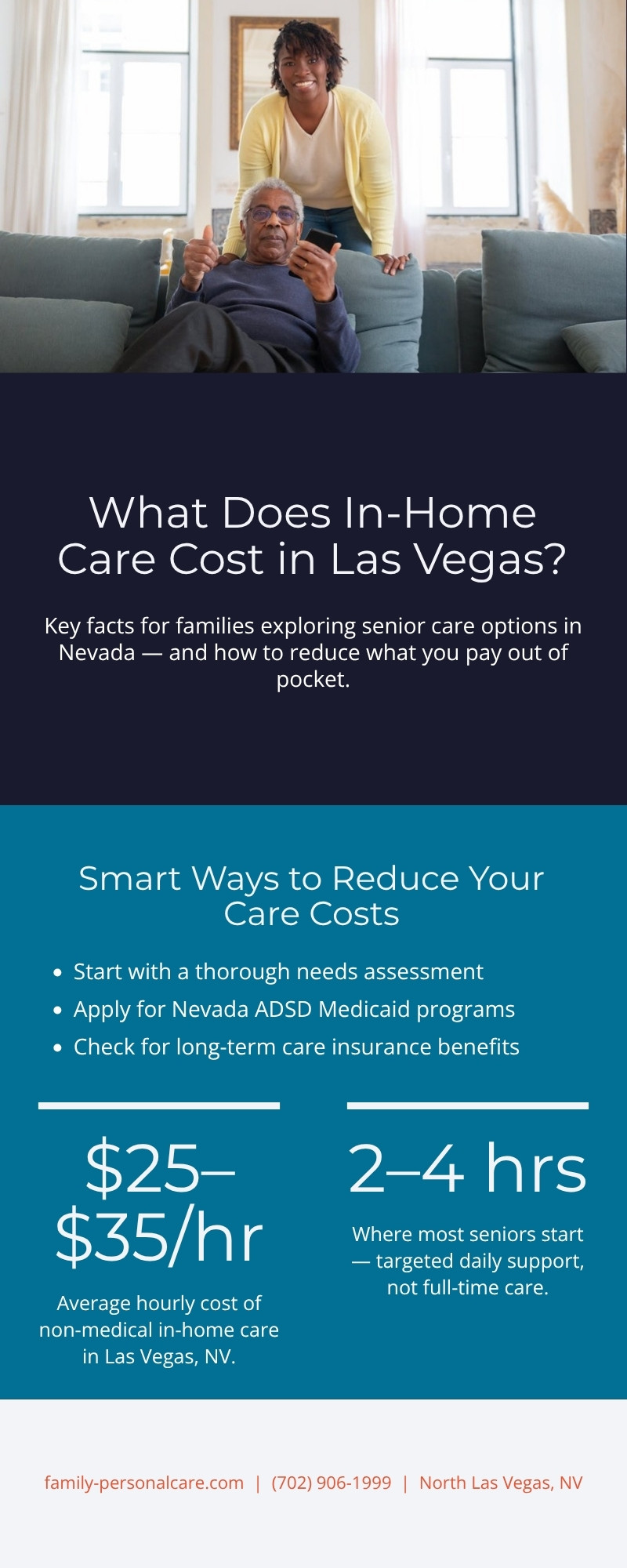
For families in Las Vegas, finding reliable in-home care for an aging parent or loved one is one of the most important decisions they will make — and one of the most expensive. Hourly rates for non-medical home care in Nevada typically range from $25 to $35 per hour, and costs can add up quickly when a senior needs several hours of support each day.
But quality care doesn’t have to mean financial strain. Nevada has state-funded programs, flexible scheduling options, and long-term care insurance benefits that can dramatically reduce what your family pays out of pocket. The problem is that most families discover these resources only after they’ve already been paying full price for months.
Whether you’re just beginning to look for senior care options or you’re already working with a caregiver and watching costs climb, these 10 practical tips will help you build an effective, affordable care plan right here in the Las Vegas valley.
Tip 1: Start With a Thorough Needs Assessment — You May Need Less Than You Think
Many families overestimate the level of care a senior needs when they first begin the search. A detailed needs assessment — conducted by the agency or by a geriatric care manager — identifies exactly what tasks your loved one needs help with and how many hours per week are genuinely required. Some seniors need only four to six hours of daily support to live safely and comfortably at home. Starting with a clear picture of actual needs prevents overspending on hours that aren’t necessary.
Tip 2: Understand the Difference Between Non-Medical and Skilled Nursing Care
Non-medical in-home care — which covers personal care, bathing, dressing, meal preparation, companionship, and light housekeeping — is significantly less expensive than skilled nursing or medical home health care. For most seniors aging at home in Las Vegas, non-medical personal care is exactly what they need. If a physician has not indicated a need for clinical services, a personal care agency like Family Personal Care can often provide everything required at a fraction of the cost of a home health nurse.
Tip 3: Apply for Nevada ADSD Programs — State-Funded Care May Be Available
The Nevada Aging and Disability Services Division (ADSD) administers several Medicaid Waiver programs that pay for in-home personal care, attendant care, respite care, and homemaker services for qualifying seniors and adults with disabilities. If your loved one receives Medicaid or has limited income and assets, they may qualify for the Home and Community Based Waiver (HCBW) or the Choices for Independent Living program — both of which cover non-medical home care at little to no cost to the family.
Many Las Vegas families don’t realize these programs exist until a social worker or care coordinator mentions them. Applying takes time — approval can take several weeks — so it’s worth starting the process early. Family Personal Care works with ADSD clients throughout North Las Vegas and the greater valley.
Tip 4: Check Whether Your Loved One Has Long-Term Care Insurance
Long-term care insurance is one of the most underutilized resources available to families paying for home care. If your loved one purchased a policy years ago, it may cover a significant portion of non-medical in-home care costs once the policy’s elimination period has been met. Review the policy for the daily benefit amount, covered service types, and any inflation protection provisions. Many policyholders — and their families — don’t realize their plan includes home care coverage. Even a partial benefit of $75 to $100 per day can meaningfully reduce the out-of-pocket cost of a regular care schedule.
Tip 5: Start With a Few Hours a Day Rather Than Full-Time Care
One of the most common — and most expensive — mistakes families make is assuming a loved one needs 24/7 care from day one. In most cases, a senior needs targeted support at specific times of day: help with morning bathing and dressing, meal preparation, medication reminders, or an afternoon check-in. Starting with a focused schedule of two to four hours per day and adjusting as needs change is far more cost-effective than immediately committing to around-the-clock coverage. A good agency will help you right-size the care plan from the start.
Tip 6: Use a Licensed, Insured Agency — Not a Private Hire
Hiring a caregiver directly through a classified ad or social media may appear less expensive, but the true cost is often higher when you account for the risks. As an employer, you become responsible for payroll taxes, workers’ compensation insurance, and liability if the caregiver is injured in your home. You also have no backup if the caregiver calls in sick. A licensed, insured agency handles all of these responsibilities, provides caregiver replacements when needed, and carries its own liability insurance — reducing your financial exposure significantly.
Tip 7: Ask About Flexible Scheduling Options
Many agencies, including Family Personal Care, offer flexible hourly scheduling that allows you to build a custom care plan around your loved one’s actual routine. Rather than committing to a fixed block of hours every day, ask whether the agency can accommodate a schedule that varies by day of the week — for example, longer sessions on days when family members are unavailable and shorter visits on weekends when family coverage is stronger. This kind of flexibility can reduce monthly costs substantially.
Tip 8: Coordinate Family Support Around Professional Care
Professional caregivers work best when they complement — rather than replace — family involvement. Identify which tasks family members can reliably cover, such as weekend visits, medication pickups, or evening check-ins, and build professional care around those gaps. This coordination model reduces the number of paid hours needed while ensuring your loved one always has someone looking out for them. Even a modest reduction in professional care hours — from five to three hours per day — can save a family thousands of dollars per year.
Tip 9: Use Respite Care to Prevent Family Caregiver Burnout
Family caregivers who try to do everything themselves often reach a breaking point — and when that happens, the sudden need for full-time professional care can be expensive and disruptive. Scheduled respite care — where a professional caregiver steps in for a few hours or a few days to give the family caregiver a break — prevents burnout, keeps the primary caregiver healthy, and actually reduces long-term costs by avoiding the crisis situations that lead to emergency care escalation. In Nevada, the ADSD Caregiver Support Program may provide respite care at reduced or no cost for qualifying families.
Tip 10: Review the Care Plan Quarterly and Adjust as Needs Change
Your loved one’s care needs are not static. Some seniors stabilize after an initial adjustment period and require fewer hours. Others have seasonal or health-related fluctuations. A quarterly review of the care plan — in conversation with the agency, the caregiver, and the family — ensures that the level of care always matches the actual need. Many families continue paying for hours that are no longer necessary simply because they never revisited the original plan. Staying proactive about these reviews is one of the simplest ways to keep home care affordable over the long term.
Frequently Asked Questions About In-Home Care Costs in Las Vegas
How much does non-medical in-home care cost per hour in Las Vegas?
The average hourly rate for non-medical in-home care in the Las Vegas valley typically ranges from $25 to $35 per hour, depending on the agency, level of care required, and scheduling. Overnight and specialized care may cost more. Some families qualify for Nevada ADSD programs that cover these costs at little or no out-of-pocket expense.
Does Medicare cover non-medical in-home care for seniors?
Medicare does not cover non-medical personal care services such as bathing assistance, personal care, companionship, or homemaker services. Medicare may cover short-term skilled home health services — such as physical therapy or nursing care — following a hospitalization if ordered by a physician. For ongoing non-medical home care, families typically pay out of pocket, use long-term care insurance, or apply for Nevada Medicaid Waiver programs through ADSD.
What is the Nevada ADSD, and how do I apply for home care assistance?
The Nevada Aging and Disability Services Division (ADSD) is the state agency that administers home and community-based care programs for seniors and adults with disabilities. Programs such as the Home and Community Based Waiver (HCBW) provide non-medical personal care, attendant care, and respite services to qualifying individuals who meet income, asset, and functional criteria. To start the application process, contact your local ADSD office or call 2-1-1 Nevada, which can connect you with a benefits navigator. Family Personal Care can also help guide your family through the process.
Is it safe to hire a private caregiver instead of going through an agency?
Hiring a private caregiver directly can seem less expensive, but it comes with significant risks. As the employer of record, your family becomes responsible for payroll taxes, workers’ compensation, and liability coverage. If the caregiver is injured on the job, you may be financially responsible. There is also no backup caregiver when the individual calls in sick. A licensed agency handles all of these responsibilities, provides replacement caregivers, and carries its own insurance — making it the safer and often more cost-effective choice over the long term.
Ready to Build an Affordable Home Care Plan in Las Vegas?
At Family Personal Care, we believe that every family deserves access to high-quality, compassionate in-home care — regardless of budget. We offer flexible scheduling, transparent pricing with no hidden fees, and guidance on accessing Nevada ADSD programs that may reduce your out-of-pocket costs. We serve families across North Las Vegas, Las Vegas, Henderson, and Summerlin. Contact us today to build a care plan that works for your family.
Family Personal Care LLC | North Las Vegas, NV | (702) 906-1999 | family-personalcare.com